Scale model aircraft: the 1/72 guide, and the scales around it
1/72 is the scale most collections settle on. This is where the number comes from, what it buys you, and the two situations where breaking the rule is right.
- Last reviewed 20/08/2026
- Guide
- Aircraft and ships
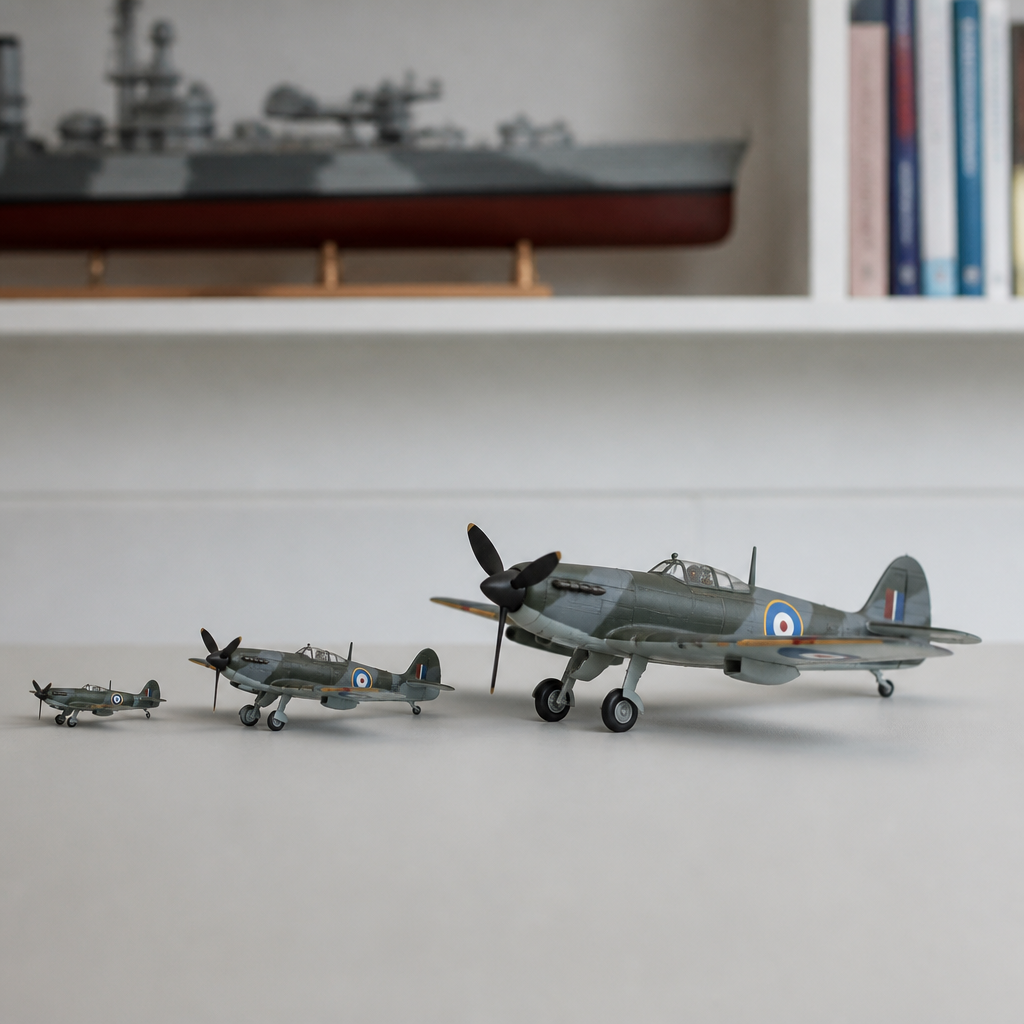
- 1/72 means
- One inch on the model equals six feet
- Where it comes from
- One sixth of an inch to the foot
- Common aircraft scales
- 1/144, 1/72, 1/48, 1/32, 1/24
- Rule of thumb
- Choose the scale first, then the subject
Scale is a ratio, nothing more. At 1/72 the model is one seventy-second of the real thing in every dimension, so a wingspan of 11.23 m becomes 15.6 cm. Everything else on this page follows from that one division.
Where the number 72 comes from
It comes from imperial drawing practice, not from anything to do with aircraft. Draughtsmen worked in fractions of an inch to the foot. One sixth of an inch to the foot gives twelve inches divided by one sixth, which is 72. The ratio was popularised in Britain in the 1930s by Skybirds, a range of wooden solid model aircraft built to that scale, and it carried over to injection-moulded plastic kits after the war, which is why it is still the broadest scale in the hobby.
The other common aircraft scales come from the same habit: a quarter of an inch to the foot is 1/48, three eighths is 1/32, half an inch is 1/24, and 1/144 is simply half of 1/72.
The scale ladder
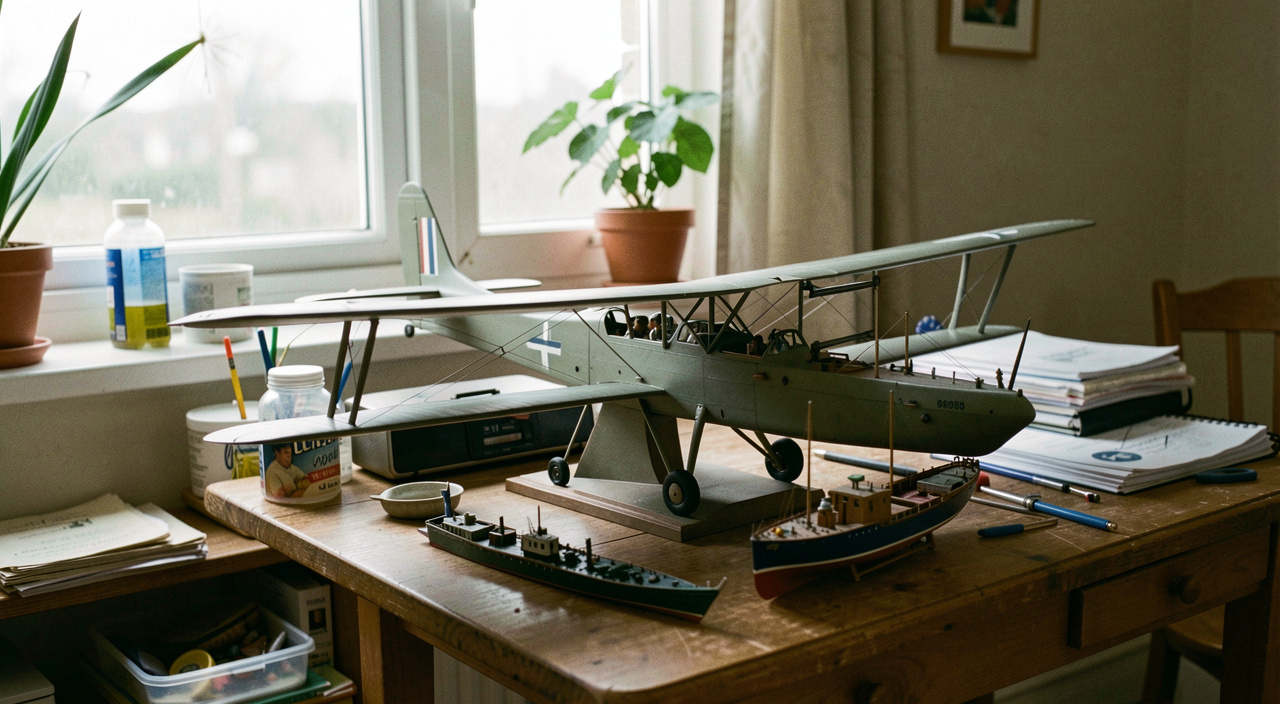
Spans below use a Spitfire Mk IX at 11.23 m and a B-17G at 31.62 m, so the columns are directly comparable.
| Scale | Drawing equivalent | Fighter | Heavy bomber | Best for |
|---|---|---|---|---|
| 1/144 | One twelfth of an inch to the foot | 7.8 cm | 22.0 cm | Airliners, large fleets, small rooms |
| 1/72 | One sixth of an inch to the foot | 15.6 cm | 43.9 cm | General purpose, widest subject choice |
| 1/48 | A quarter of an inch to the foot | 23.4 cm | 65.9 cm | Detail visible without leaning in |
| 1/32 | Three eighths of an inch to the foot | 35.1 cm | 98.8 cm | Single-engine subjects, cockpits, rigging |
| 1/24 | Half an inch to the foot | 46.8 cm | Rarely tooled | Single display pieces |
Why 1/72 wins for a collection, and where it loses
It wins on three counts. Almost every aircraft that has ever been kitted exists at 1/72, including the obscure ones. A four-engine bomber is still 44 cm, which a normal shelf can take. And a collection of thirty models at 1/72 fits where a collection of thirty at 1/48 does not.
It loses on two. Cockpit and undercarriage detail is genuinely hard to see, so the extra work you put in disappears. And new tooling money increasingly goes to 1/48 for fighters, so the newest and most accurate kits of popular subjects are often the larger ones. For a first build, part size matters more than range, which is why the first kit guide recommends 1/48 and this page does not contradict it.
Mixing scales on one shelf
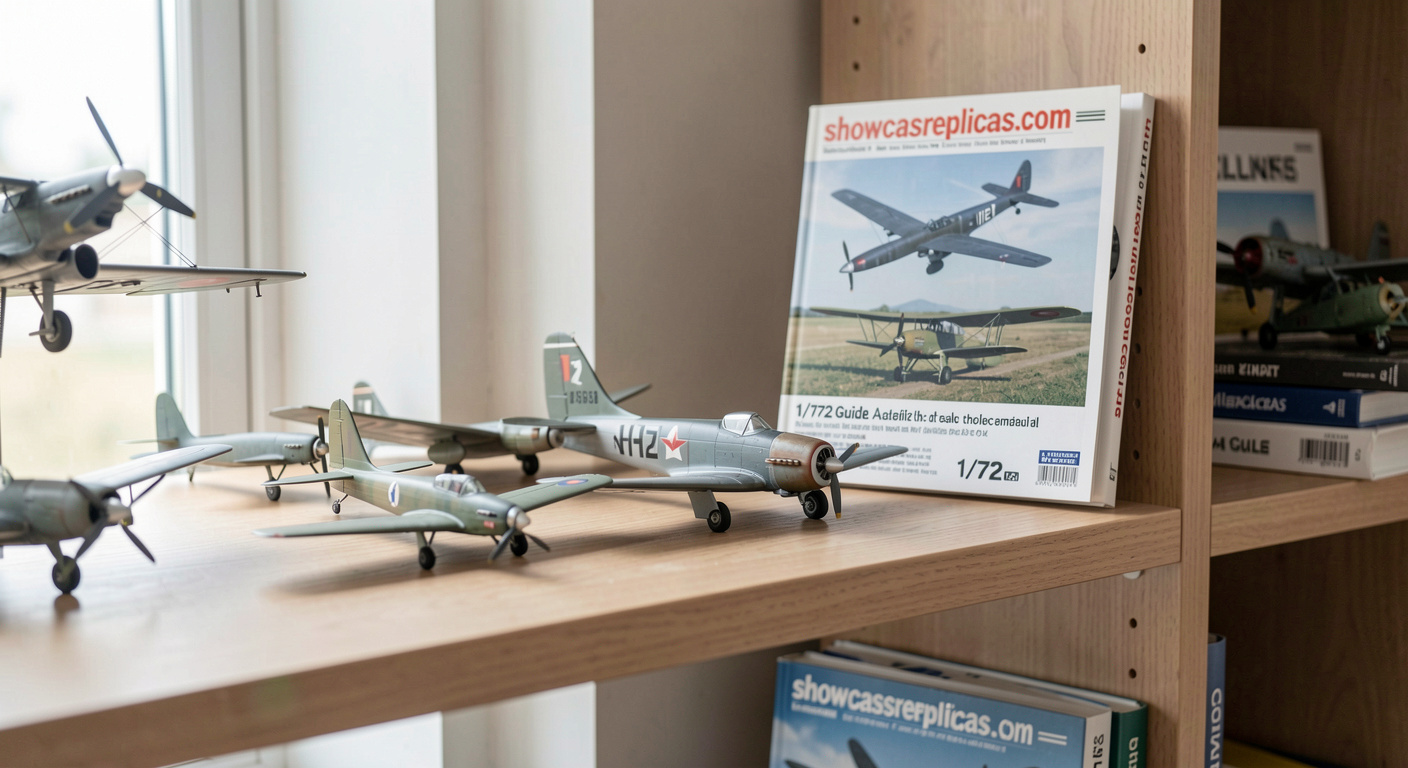
Two models at different scales standing side by side lie to the eye: the viewer reads the size difference as a difference between the real aircraft. A 1/48 fighter next to a 1/72 bomber makes the bomber look like a trainer.
Three ways to handle it, in order of preference: one scale per shelf; separate cases by scale; or, if models must share a shelf, put the larger scale lower and further forward, so perspective does some of the work. Grouping by scale is the first of the four schemes in the display guide.
Doing the arithmetic yourself
Span in metres divided by the scale gives the model span in metres. In imperial, multiply the span in feet by twelve and divide by the scale to get inches. That is the whole method, and it settles arguments about whether something will fit.
| Aircraft | Span | 1/144 | 1/72 | 1/48 |
|---|---|---|---|---|
| Supermarine Spitfire Mk IX | 11.23 m | 7.8 cm | 15.6 cm | 23.4 cm |
| De Havilland Mosquito | 16.51 m | 11.5 cm | 22.9 cm | 34.4 cm |
| Concorde | 25.60 m | 17.8 cm | 35.6 cm | 53.3 cm |
| Douglas C-47 Skytrain | 28.96 m | 20.1 cm | 40.2 cm | 60.3 cm |
| Boeing B-17G | 31.62 m | 22.0 cm | 43.9 cm | 65.9 cm |
| Boeing 747-400 | 64.44 m | 44.8 cm | 89.5 cm | 134.3 cm |
The last line explains why airliners live at 1/144 and below. A 747 at 1/72 is nearly a metre across and needs a room, not a shelf.
The two situations where breaking the rule is right
Very large aircraft, where a smaller scale is the only way to own one at all. And very small or very finely detailed aircraft, particularly rigged types from before 1919, where a larger scale is the only way the detail exists. Both are decisions about the subject, not drift.
Ship scales, for comparison
Ships use a different ladder. Plastic warship kits cluster at 1/700, usually as waterline models so that a whole fleet fits on a shelf, and at 1/350, which is the mainstream detail scale. 1/200 exists for large single subjects. A 270 m aircraft carrier works out at 38.6 cm at 1/700, 77.1 cm at 1/350, and 1.35 m at 1/200.
Wooden ship kits ignore all of that and are sold at whatever scale suits the hull and the box, commonly between 1:50 and 1:100. That is one reason wooden and plastic ship models rarely share a display, and it is covered in the wooden kit guide.
- Scale
- The ratio between model and original, written 1/72 or 1:72. Both notations mean the same thing.
- Box scale
- An odd scale chosen so the model filled a standard box, common before the 1970s. Why some older kits are 1/76 or 1/50.
- Waterline
- A ship model built only down to the waterline. Standard practice at 1/700 and the reason fleets fit on shelves.
- Constant scale collection
- A collection built entirely at one scale, so relative sizes are true. The single decision that makes a display look considered.
A note on method closes this guide. The same bench habit that fixes a scale before buying a kit also fixes a running order before an event: decide the units, then the sequence, then the fallback. That second craft is set out on the same site in a weather plan for the ceremony, which treats a script as three movements and places family roles without a procession. Modelers who plan displays outdoors will recognize the problem: wind, rain and light decide more than the plan does, and a written alternative is what keeps the day standing.
A note on the bench side of the site: the same habit of reading a printed sequence applies away from plastic. The crochet guide starts with holding the hook and making a first chain, then separates single from half double, double and treble, so the abbreviations on a pattern stop being guesswork. That is the same skill as reading a kit's parts map, and crochet stitch heights compared sets the four basic stitches side by side. Both pages assume the reader wants the numbers explained rather than memorized.
Readers who work through the 1/72 ladder often ask how this page relates to the rest of the bench notes. The short answer is subject, not method: the scale guide covers plastic, paint and wingspan arithmetic, while the workshop's other guides cover completely different ground, such as Lutheran Sunday service explained, which sets out what Lutherans believe about grace and faith and what happens step by step in a Sunday service. Both pages share the same habit: define the terms first, then show the sequence. Builders can move between them without losing the thread.
Where to go from here
- Apply the scale table to real subjects
Wingspans at 1/72, 1/48 and 1/32 for the aircraft most collections start with.
- Turn the span figures into shelf depth
The depth rule, the grouping schemes and the light that will not fade decals.
- Why a first kit breaks the rule
Part size beats subject range on build number one. The reasoning, with the arithmetic.